Tuesday, November 13, 2012

Innovation and Sustainability: Devastation after 2030?


One thing that is talked a lot about is the need to buy American in order to boost our economy.  This is very true, but what is the impact on our country and the world as a whole if we only continue to support mega-corporations like Monsanto?  Has innovation really helped sustainability, or has it harmed it?  Do we really need everything that we consume as a country?

Two of the biggest problems today regarding the environment are overproduction and over-consumption.  These two actions by humans, the dominant species of our planet, are causing our resources to deplete at an alarming rate and are causing an imbalance in our world population’s ability to sustain itself world-wide.  Using projections surrounding the year 2030, this article will show how over-consumption of food and groundwater, along with overproduction of consumer goods and mass crops to sustain these over-consumptions, are putting human life in a cycle that is destroying our planet.

Consumption in general is expected in any species population; in order to truly see how consumption affects our environment, we must divide it into over-consumption and under-consumption, and then look to see if there is an imbalance and what causes it.  Concerning the human population as it stands now, there is major over-consumption found in rich countries such as the United States and France; where under-consumption is found is in poor nations such as those in Africa.  In currently developing countries such as China and India, there are new trends starting where the “wealth of a sizable minority is permitting them to acquire the consumption habits (e.g., eating a lot of meat and driving automobiles) of the rich nations” (Turk & Bensel, 2011, Sec. 2.3, para. 13).  In overpopulated nations such as those in Africa that are experiencing under-consumption, or the inability to meet their basic consumption needs, this creates a large number of people who are unable to help create sustainability that could help the entire world; it takes everything for them to just survive.

According to the I = PAT equation, in overpopulated nations such as China where the economy is beginning to accelerate and over-consumption is becoming a habit for those who have the means to do it, it is only a matter of time before these large populations will over-consume and begin to devastate the entire planet. The equation is that if one takes into consideration the population size (P), the affluence factor that leads to more consumption (A), and the technology increases to meet the increased consumption (T), the impact on our planet will be greater (I) (Turk & Bensel, 2011, Sec. 2.3, para. 2).  The projected population in 2030 in China is 1,393,076,000 (United Nations, 2010).  The projected economy of China for 2030 is that the gap will be close to closing between China and America, with a 6% per capita income increase in China.  Population increase (P) + an increase in per capita income (A) + increase in technology to meet the demands of a better economy for a large population of people (T) = an extraordinarily large impact on the environment from the world’s largest population.

Food and groundwater for populations such as the example above will need to be immense.  One answer to the issue meeting the consumption demands of such large affluent groups of people is mass crop and livestock production.  Mass crop production has been introduced to the U.S. and other countries in the form of genetically modified organisms.  One example is Monsanto’s Roundup Ready Soybeans. 

Roundup is an herbicide that is highly toxic; unless a plant is genetically modified to withstand the herbicide, it will be killed by it.  While testing has yet to be done on the safety of these crops for consumption, there is the issue of toxic chemicals being put on the crops and into the soil.  Roundup is made with glyphosate.  “Glyphosate poses a danger to wild and native plants from aerial spraying of fields. When sprayed from the air, the herbicide can drift 1,200 to 2,500 feet past fields or other target areas where it quickly kills plant life and settles in water. Studies have shown that Roundup added to ponds will result in a 50 to 100 percent death rate of all tadpole life within the water, according to Scientific American. Trees exposed to Roundup show dieback and lack of winter hardiness” (Sharpe, 2012, para. 5).  As of right now, 90% of soybeans in the U.S. are Roundup Ready.  The increase in demand for these and other large production crops are leading to a large amount of chemical application to our soil, with more toxic chemicals being created due to weeds becoming resistant to the current treatments. 

If we continue to over-consume and allow poorer countries no choice but to under-consume, the imbalance of the planet will eventually destroy it.  The U.N. predicts that food production must increase by 50% by the year 2030 just to meet increasing demands of those already consuming average or above average amounts, with the under-consumption of poor nations being considered an emergency (AP, 2008, para. 1-4).  We must change things now before it is too late and the only way that we can save our planet will be to starve.


 References:
AP. (2008).  UN: 50 percent more food needed by 2030.  Associated Press.  Retrieved from:  http://www.msnbc.msn.com/id/24942035/ns/world_news-world_environment/t/un-percent-more-food-needed/#.UJhinMXA-_4
Sharpe, K. (2012).  Roundup weed killer safety.  Garden Guides.  Retrieved from:  http://www.gardenguides.com/131167-roundup-weed-killer-safety.html
Turk, J., & Bensel, T. (2011). Contemporary environmental issues. San Diego, CA: Bridgepoint Education, Inc.
United Nations, Department of Social and Economic Affairs. (2010).  Probabilistic projections (total population).  Retrieved from:  http://esa.un.org/unpd/wpp/P-WPP/htm/PWPP_Total-Population.htm

© 2012 Anita Brown, do not copy without permission.


Tuesday, March 13, 2012

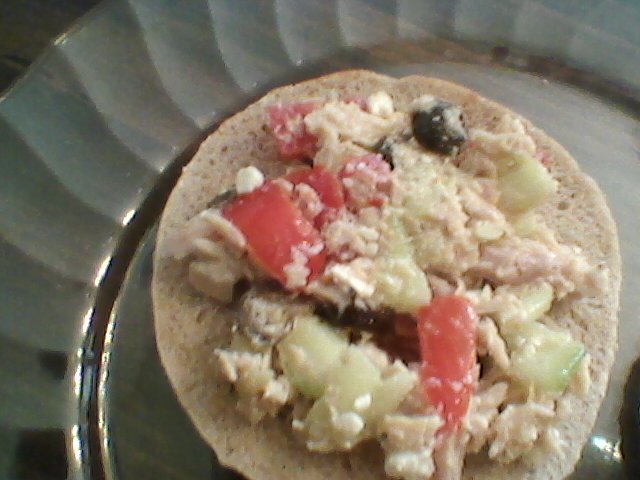
Recipe: The Best Tuna Salad on the Face of the Planet

With warmer weather coming, this is one you definitely do not want to miss out on!

Ingredients:
2 cans chunk white dolphin free tuna in water, drained
1 cucumber, peeled and chopped
1 small package organic cherry tomatoes, chopped
3/4 cup jarred black olives, drained and chopped or sliced
1/2 container Mediterranean style feta cheese
1/2 cup extra virgin olive oil
3 tbsp lemon juice
3 tbsp red wine vinegar
6 whole grain pita pockets or 12 slices whole grain bread

Put all ingredients in a mixing bowl and stir with a fork until tuna is broken up well and all ingredients are mixed together thoroughly.  Serve in pockets or as sandwiches.  This makes a great light dinner in warm weather with chunks of fresh melon or other fruit on the side!  Enjoy!

Serves 4-6


© 2012 Anita Brown, do not copy without permission.

Recipe: Eggs in a Mediterranean Basket

Ingredients:

4 large slices fresh baked organic multi-grain bread
4 large organic eggs
Mediterranean feta cheese
Olive oil
Fresh ground black pepper

Optional: Diced tomatoes, onions, black olives, diced mushrooms

Coat a large iron skillet generously with olive oil and set on medium heat.  Tear a hole in the center of each slice of bread.  Once skillet is heated thoroughly, lay each slice of bread in skillet and crack one egg into the center of each slice.  Top with crumbled feta cheese and pepper (and any of the optional ingredients if desired), cover, and cook until egg whites are done through and yolks are to desired consistency, being careful that the bottom does not begin to burn (if this starts to happen, just reduce the heat, but if you are using an iron skillet this shouldn't be a big problem).  Remove, drizzle with a bit more olive oil if desired, and enjoy!

Serves 2.


© 2012 Anita Brown, do not copy without permission.


Recipe: Wild Mushroom Angolotti with Mediterranean Chicken

Ingredients:

8 organic chicken tenderloins
2 packages Buitoni All Natural Wild Mushroom Agnolotti
Olive oil
Sliced jarred black olives
Jarred capers
1 small package organic cherry or plum tomatoes
1 clove organic garlic
Lemon juice
Feta cheese
Rosemary
Thyme
Oregano
Basil
Fresh ground black pepper

This is one of those recipes that you just have to play with.  All of the ingredients are important, but it is up to you how much of each ingredient that want to use, so some of them are listed without measurements.  Be creative, and enjoy!

Toss chicken with olive oil and some of each of the seasonings in a skillet and cook until done.  Remove, and set aside.  Add more olive oil to the skillet, some lemon juice, seasonings, garlic, olives, and capers and saute until hot.  Add tomatoes and feta cheese.  Stir until cheese is melted and tomatoes are hot.

In a large pot, bring water to a rolling boil. Add agnolotti and reduce heat to medium-high.  Do not let the agnolotti roll around in the pot.  Cook for about 5-6 minutes.  

On each plate, lay equal amounts of agnolotti and chicken.  Cover with the olive mix from the skillet, and enjoy!  You can serve this with sliced bread and seasoned dipping oil if desired.


Serves 4

© 2012 Anita Brown, do not copy without permission.


Sunday, March 4, 2012

Non-organic Foods Linked to Obesity, Diabetes in Children

Childhood obesity is a growing problem in the United States that needs to be addressed, and is leading our children to develop dangerous and deadly diseases such as diabetes.  According to the Centers for Disease Control and Prevention, “When diabetes strikes during childhood, it is routinely assumed to be type 1, or juvenile-onset diabetes.  However, in the last 2 decades, type 2 diabetes (formerly known as adult-onset diabetes) has been reported among U.S. children and adolescents with increasing frequency” (CDC, 2011, para. 2).  This is a frightening problem but is one that the researcher has found to be easily preventable with an approach using three key components.  One component is ensuring that the child is eating well-balanced meals.  The second is increasing physical activity and exercise.  A third component that is lesser known but just as equally important as the former two is the removal of non-organic and processed foods from the diet.  Removing these harmful foods from the diet is the key factor in making the exercise and balancing of meals actually work in reducing weight and the occurrence of diabetes in children.
With diabetes in children already being shown as on the rise since the 1990s, a correlation that seems to be more than mere coincidence needs to be explored; this is the introduction of genetically modified organisms (GMOs) into the United States food industry right around the same time, along with all of the products that have resulted because of the use of GMOs. Many of these foods are touted as safe by the Food and Drug Administration, but research shows otherwise, revealing shady studies and products not thoroughly tested for safety being used in almost all of the foods we buy.  While some of these products could be potentially damaging to our bodies, others have changed the way our bodies process foods and have even altered our metabolisms. 
Some of my preliminary findings suggest that these foods were allowed to pass into the market even though they should have been further tested right from the very first genetically modified food development.  In 1994, the first genetically modified food hit the market.  According to Timothy Rockey of Iowa State University,
The finished product, the FLAVR SAVR tomato, could be allowed to fully ripen on the vine and develop a more homegrown flavor. However, the introduction of the FLAVR SAVR tomato into the market in the mid-1990’s created a good deal of controversy and consumer resistance. Much of the hype surrounding genetically altered crops was created by public misperceptions and fears of "mutant veggies" that were encouraged by various organic and environmental groups. However, the safety of new substances introduced into a food product was a real issue that was brought to the attention of the government and the public. However, after extensive safety research by Calgene and dialogue with the FDA, the FDA found Calgene’s tomato to be safe and approved the FLAVR SAVR tomato on May 17, 1994. (Rockey, 2000, para. 6)
Rockey continued by concluding that “Transgenic plants ought to be tested for safety and regulated by the FDA, but considering the possibilities that the genetic engineering of crops offers and that a demonstrably safe genetically engineered crop (the FLAVR SAVR tomato) has been developed, the public and the government should set aside their concerns, educate themselves on this issue, and give genetic engineering a chance” (Rockey, 2000, para. 11). 
What Rockey failed to discover in his research, however, is that the studies done by Calgene showed less than desirable consistency and follow-up.  My research has discovered that according to Jeffery Smith,
Calgene tested two separate Flavr Savr tomato lines. Both had the same gene inserted into the same type of tomato. The process of insertion and the subsequent cloning of the cells into GM plants can cause lots of unique and unpredicted consequences. The two lines, therefore, were not considered identical.

The rats that ate one of these Flavr Savr varieties probably wished they were in a different test group. Out of 20 female rats, 7 developed stomach lesions—bleeding stomachs. The rats eating the other Flavr Savr, or the natural tomatoes, or no tomatoes at all had no lesions. (Smith, 2011, para. 6 & 7)

Smith continues to show how some rats were further affected by the genetically modified tomatoes, noting that several of the rats had died.  All but one had eaten the line that caused the stomach bleeding.  Regarding how Calgene’s study explained this, Smith says “the endnote summarily dismissed the cause of death as husbandry error, and no additional data or explanation was provided. The dead rats were simply replaced with new ones” (Smith, 2011, para. 11).  Smith’s article goes on to show how it is generally expected that a study not explain fatalities such as this with a generic footnote, and that said test subjects should have been isolated and the product should not have been approved until a cause of death in the rats had been determined.
Genetically modified corn changed the food industry far more than the tomato, however.  When Monsanto developed round-up ready soybeans and corn, the crop results increased dramatically, making U.S. corn one of the most utilized crops in the world.  The amount of corn being produced lead to the widespread use of corn in almost everything that we consume.  One of these products is high fructose corn syrup.  According to Vanessa Barrington of EcoSalon (2009), many health experts and activists have thought for quite some time that there was a connection between the addition of high fructose corn syrup to our foods and a rise in obesity, particularly in children.  The rise in obesity in the United States and the introduction of high fructose corn syrup into our food supply seems to correlate.  Barrington goes on to state that a study done at University of California not only supports this connection, but also shows us why high fructose corn syrup affects our health differently than glucose (sugar).  According to the study, not only does high fructose corn syrup find its way into the majority of our foods, it also damages human metabolism due to being digested differently than glucose.  The Official Journal of the American Academy of Pediatrics published an article proclaiming the following statement:  “[An increase in] Obesity has led to a dramatic increase in the incidence of type 2 diabetes (T2DM) among children and adolescents over the past 2 decades. Obesity is strongly associated with insulin resistance, which, when coupled with relative insulin deficiency, leads to the development of overt T2DM" (Hannon, Rao, & Arslanian, 2005, pp. 473 -480).  This statement backs up the previous information presented by the Centers for Disease Control and Prevention and provides insight as to the causes of type 2 diabetes.
While research has shown that not only are genetically modified foods potentially harmful to us and that products derived from them can cause obesity and diabetes (such as high fructose corn syrup), the question remains as to how processed foods over all are related to the problem of obesity and diabetes.  According to Bo MacInnus and Gordon Rausser of the Department of Agricultural and Resource Economics at Berkeley, there is indeed a direct connection between childhood obesity and the increased use of processed foods.  Presenting the idea that “There is evidence of immaterial change in children’s total energy intakes and an overall decrease in their dietary fat intakes” (MacInnus and Rausser, 2004, pg. 2), they go on to state that “Concomitantly, Americans spend 90 percent of their food expenditures on processed foods, creating a dramatic rise in children’s consumption of processed foods” (MacInnus and Rausser, 2004, pg. 2).  Just how does the change cause obesity?   MacInnus and Rausser show this process by explaining the following:
The human body produces energy from food, and the amount and the type of food eaten determines the efficiency of bodily energy production. Processed foods such as refined sugar and white flour raise blood sugar levels quickly and produce high levels of glucose in the blood, which in turn stimulates the pancreas to release high levels of insulin to transport glucose to the cells for immediate energy use. When these immediate energy needs are met, the liver converts excess glucose into glycogen, which is stored in the liver and muscles for later energy use. Once this need is met, the liver converts any remaining glucose into fat. (MacInnus and Rausser, 2004, pg. 2)

MacInnus and Rausser also show that there is a dangerous cycle here.  The process as described above leads to obesity, and also a condition called insulin resistance.  Insulin resistance leads to becoming more obese.  With a constant intake of these processed and refined foods, children become stuck in a cycle that is impossible to get out of without eliminating processed and refined foods altogether (MacInnus and Rausser, 2004, pg. 2-3).
The only way it can be broken is by switching to an all organic diet, allowing the body to begin processing foods the correct way without the presence of insulin resistance.  This is not limited to just refined sugars and flours or carbohydrates.  Chemicals such as preservatives and nitrates are also a contributing factor, according to Suzanne de la Monte of Rhode Island Hospital.  "We have become a 'nitrosamine generation.' In essence, we have moved to a diet that is rich in amines and nitrates, which lead to increased nitrosamine production. We receive increased exposure through the abundant use of nitrate-containing fertilizers for agriculture," said De la Monte. "Not only do we consume them in processed foods, but they get into our food supply by leeching from the soil and contaminating water supplies used for crop irrigation, food processing and drinking" (Melville, 2009, para. 3).  
Once a food has been genetically altered, it is in my opinion considered to be partially a chemical agent such as what de la Monte has described.  Many genetically modified foods are designed to produce chemicals that are pesticides or cause the plant to be able to resist herbicides.  This is no longer a just a food but a food that contains a chemical agent.  It is the chemical agents that are found in the soil from treatments used on non-organic foods and found within the genetically modified foods themselves that cause these problems.
Our children have eaten the foods that nature created since the beginning of mankind’s existence.  Allowing processed, refined, and genetically altered foods to take over our food industry has caused detrimental health problems to our children that will not only decrease their quality of life, but the life span itself.  Organic foods must be in demand for it to become widely available and affordable to the consumer.  Research has determined that the more people begin to speak out against the chemical food industry and to purchase organic and locally grown foods whenever possible, the quicker we will return to a healthier balance of choices for the nation’s children.

References:

Barrington, V. (2009 Dec 24). High fructose corn syrup proven to cause human obesity. Retrieved from: http://www.alternet.org/food/144816
Centers for Disease Control and Prevention (2011). Diabetes public health resource 2011. Retrieved from http://www.cdc.gov/diabetes/projects/cda2.htm
Hannon, T., Rao, G., Arslanian, S. (2005 Aug 1). Childhood obesity and type 2 diabetes mellitus. PEDIATRICS, 116 (2), pp. 473 -480. doi: 10.1542/peds.2004-2536
MacInnus, B., Rausser, G. (2004). Childhood obesity: is there something amiss with food processing? ARE Seminar. University of California, Berkeley. Retrieved from: http://are.berkeley.edu/~karp/2004-2005_seminars/MacInnis_obesity.pdf
Melville, K. (2009). Processed foods linked to Alzheimer’s and diabetes. Scienceagogo. Retrieved from: http://www.scienceagogo.com/news/20090605234735data_trunc_sys.shtml
Rockey, T. (2000). The transgenic tomato: a safe and delicious alternative to the normal supermarket tomato. Retrieved from: http://www.public.iastate.edu/%7Erhetoric/105H16/cofp/tmrcofp.html
Smith, J. (2011 Jan 1). Throwing biotech lies at tomatoes. Axis of Logic. Retrieved from http://axisoflogic.com/artman/publish/Article_61930.shtml

© 2012 Anita Brown, do not copy without permission.


Thursday, November 3, 2011

Perfect for Thanksgiving: Savory Corn Pudding

Here is another recipe that I've came up with, it is a savory corn pudding.  I hope you enjoy it :)

Ingredients
1 16 oz. package frozen organic corn (sweet white is the best)
1 cup organic half and half
2 organic large brown eggs
1/3 cup organic sugar
2 Tbsp. organic flour
1 medium onion chopped
4 slices of organic whole grain bread, cubed
3 Tbsp organic butter
Freshly ground sea salt and black pepper to taste

Preheat oven to 350 degrees.  Use butter to coat the inside of a 9-inch round pan, and then set the remainder aside.

Put the corn in a saucepan and cover with water.  Bring to a boil on the stove and cook until corn is tender.  In the meantime, in a mixing bowl, combine all of the ingredients except for the bread cubes, corn, and butter until smooth.  Once the corn is finished cooking, drain all water from it and add your remaining butter to the corn, stirring until melted.  Fold the corn and the bread cubes into the mix in your bowl.  Transfer to the 9-inch pan and bake until solid throughout and slightly golden on the top (Approx. 45 minutes).

You can also substitute the onion for other savory ingredients, such as mushrooms, spinach, chopped sage, or a combination of them all.  Get creative!

Serves 4-6

Copyright © 2011 Anita Brown


Friday, October 28, 2011

Monsanto: The Agent Orange Factor

Many of you who read my blog and my postings on Facebook know that the one company I campaign against the most is Monsanto.  But how much do you really know about this mega-corporation?  Welcome to the first feature in my blog regarding Monsanto and its history, and how the company affects us now.

Did you know that every time you use a Monsanto product, such as Roundup, Roundup ready soybeans, or anything made with Roundup ready soybeans or other genetically modified organisms, you provide profit to one of the companies that made Agent Orange for the use of the U.S. Government during the Vietnam War? 

Most people associate Agent Orange with Dow Chemical, but the fact is that ten different companies produced Agent Orange, including Monsanto.   According to Monsanto’s website “The manufacturing companies [for Agent Orange] included Diamond Shamrock Corporation, Dow Chemical Company, Hercules, Inc., T-H Agricultural & Nutrition Company, Thompson Chemicals Corporation, Uniroyal Inc. and Monsanto Company, which at the time was a chemical manufacturer.  Monsanto manufactured Agent Orange from 1965 to 1969.”1

Agent Orange was invented by Arthur Galston, a U.S. biological warfare researcher as part of an ongoing research program in the early 1950’s.  By the mid-1960’s Galston was lobbying for the U.S. government to stop production and use of Agent Orange.  He eventually succeeded in bringing enough awareness to stop it, but the damage had already been done.   Monsanto, along with the other manufacturing companies, continued to contract with the U.S. government to produce Agent Orange during this time, even though the dangers were being made known.  Lawsuits resulted in the late 1970’s, and were settled out of court up until the 1990’s.  
            
Monsanto’s current position on the Agent Orange issue is one that causes us to question the current integrity of the company.  Even though Monsanto willingly contracted to produce Agent Orange for a profit, and continued to do so after the dangers were presented, their website states “We believe that the adverse consequences alleged to have arisen out of the Vietnam War, including the use of Agent Orange, should be resolved by the governments that were involved.”1

This leads us to wonder how Monsanto’s involvement in the production of Agent Orange affects us now.  Beyond the morally questionable stance that the company still continues to take to this day regarding their responsibility in the matter overseas and with our veterans, we have to look at where these chemicals were produced and what has become of these facilities.  Uniroyal Ltd, one of the companies that produced Agent Orange, owned a facility in Canada known as Chemtura.  Chemtura was located in the town Elmira, which is in Ontario.  The facility produced about 2.6 million litres of Agent Orange and its toxic component, Dioxin, still contaminates the town’s soil and water today.  The facility, known locally as the “Toxidome”, is closed and treated much like Chernobyl.  The adjoining cemetery is no longer used for burials, because the soil is still considered to be too toxic.2 

Monsanto’s Agent Orange production occurred at the Monsanto Chemical Co. site in Nitro, WV.3  Monsanto’s website fails to mention that a class action lawsuit has been filed against them in behalf of the people of Nitro.  Phase 1 of the trial began in September of this year.  Monsanto has been unwilling to offer any correct cleanup of its facilities and is fighting any responsibility toward the people and the properties that have been damaged by the Dioxin levels in their town. 4

This all leads one to see the obvious: The products currently being manufactured by Monsanto are going to continue to be manufactured, regardless of any information provided that states they are dangerous.  If/when they are finally forced to cease production of these products, they will not willingly hold any responsibility toward anyone affected by these products or the waste from their production. 


1 Monsanto. (n.d.):  Agent Orange: Background on Monsanto’s Involvement. Monsanto Corporation:      
       Author.  Retrieved October 28, 2011 from http://www.monsanto.com/newsviews/Pages/agent-orange-background-monsanto-involvement.aspx 

2 York, G. Mick, H. (2008): The Last Ghost of the Vietnam War. Globe and Mail Issue date July 12,   
       2008. Retrieve from http://www.theglobeandmail.com/archives/article697346.ece

3 The Aspen Institute.  (2011): Dioxin ‘Hot Spots’ in the United States. The Aspen Institute: Author.    

4 Bibb vs Monsanto Website (2011): Civil Action No. 04-C-486. Retrieved from http://bibbclass.com/


Copyright © 2011 Anita Brown

Thursday, October 27, 2011

Organic Creamy Chicken Noodle Soup

As fall is getting chillier and winter is setting in, we all want something hearty and comforting to warm our bones.  Eating organic has to be a lifelong commitment, even during the coldest of seasons.  Here is my own recipe for creamy chicken noodle soup to get you started.  Enjoy, and please leave a comment as to how it turned out!


Ingredients
3 Organic, All Natural, or Amish chicken breasts*
1 package of Pacific Organic Chicken Broth
1 16 oz package frozen organic mixed vegetables
3 large organic green onion bulbs
1/2 16 oz package organic or amish egg noodles (8 oz)
2 cups organic half and half
1/4 cup organic flour
2 tablespoons salted organic butter
Water
Sea Salt to taste

Boil chicken breasts in water in a dutch oven until cooked through.  Remove and set stock aside in a bowl.  Debone the chicken, being sure to remove all skin and gristle as well, and shred.  Pour chicken broth into now empty dutch oven, add chicken, and then add your reserved stock until dutch oven is 2/3 full.  Add noodles and frozen vegetables, bring to a boil and then reduce heat to medium.  Simmer until vegetables and and noodles are tender.  In a separate bowl, mix half and half with flour until smooth.  Add to pot, stirring well.  Add butter and salt to taste.  Simmer until slightly thickened.  Your soup is now ready to serve and enjoy ;)

*Although it is the best option, organic chicken isn't always easy to come by.  If purchasing chicken that is labeled as All Natural or Amish, be sure to check that the label specifies that the chickens have not been given and hormones or steroids, and have been fed a vegetarian diet.  Even though these non-organic options have most likely been fed genetically modified foods, they are still better than the regular alternative.


Copyright © 2011 Anita Brown

French documentary fully exposes Monsanto

I highly recommend watching the documentary The World According to Monsanto.  The information that follows is taken from the video's description area on YouTube.  The video follows.  I don't suggest popcorn for this one...

On March 11, 2008 a new documentary was aired on French television, a documentary that Americans won't ever see. The gigantic bio-tech corporation Monsanto is threatening to destroy the agricultural biodiversity which has served mankind for thousands of years.


Genetically modified foods (or GM foods) are foods derived from genetically modified organisms (GMO). Genetically modified organisms have had specific changes introduced into their DNA by genetic engineering techniques. These techniques are much more precise than mutagenesis (mutation breeding) where an organism is exposed to radiation or chemicals to create a non-specific but stable change. Other techniques by which humans modify food organisms include selective breeding; plant breeding, and animal breeding, and somaclonal variation. GM foods were first put on the market in the early 1990s. Typically, genetically modified foods are transgenic plant products: soybean, corn, canola, and cotton seed oil. Animal products have also been developed, although as of July 2010 none are currently on the market. In 2006 a pig was controversially engineered to produce omega-3 fatty acids through the expression of a roundworm gene. Researchers have also developed a genetically-modified breed of pigs that are able to absorb plant phosphorus more efficiently, and as a consequence the phosphorus content of their manure is reduced by as much as 60%.


(Copyright Disclaimer Under Section 107 of the Copyright Act 1976, allowance is made for "fair use" for purposes such as criticism, comment, news reporting, teaching, scholarship, and research. Fair use is a use permitted by copyright statute that might otherwise be infringing. Non-profit, educational or personal use tips the balance in favor of fair use. All copyrighted materials contained herein belong to their respective copyright holders, I do not claim ownership over any of these materials. I realize no profit, monetary or otherwise, from the exhibition of these videos.)

Friday, October 7, 2011

Allen County, Ohio--Welcome to Monsanto Country


Attempting to find locally grown organic foods here where I currently live in Allen County, Ohio has been quite difficult. Being a farming community, I would have assumed that there would be lots of local farmers offering up their organic fresh fruits and vegetables, but no such luck. The one small farmer's market that exists here does not offer organic foods, and the larger farmer's market that used to exist in downtown Lima shut down a few years ago. With pun fully intended, my search for organic produce here was less than fruitful.

Next, I began searching for organic meat. If you go to a grocer here in Allen county and ask for organic raised beef, you are going to be looked at as if you just landed from Mars. Calling local butchers and inquiring about it received extremely rude responses that did not even come with a goodbye. This was even worse than the search for produce, and by the end of it, I truly felt as though I DID fall off of another planet, and was surrounded not by people, but by sheep.

My search ended at Meijer, where I found an organic alternative offered to almost everything in stock, at reasonable prices. I was thrilled! It felt like health heaven as I perused the aisles, gathering up everything from fresh and frozen organic fruits and veggies to organic milk and eggs, breads, cereal, even cottage cheese and coffee creamer. I was saddened by the fact that being in a farming community, nothing organic being sold was locally grown, but at least I found something!

Next, I went to check out the meat. All of the Meijer chicken and pork touted all-natural labels that actually meant it, stating that the chickens were never given growth hormones or steroids, and were fed an all-natural vegetarian diet. I meandered over to the butcher counter, and this is where I found Naturewell beef.

Naturewell beef, while not to be confused as organic, is better than the general beef supply found in your local grocery store. Here are a few facts about Naturewell from their website:

Routinely tested
At Naturewell® we routinely test our beef to ensure our promise of no antibiotics or added hormones. Our certified feeding facilities are regularly monitored and audited by National Beef® representatives and third party auditors, and we require our ranchers to sign affidavits to confirm their compliance with all aspects of the Naturewell program.


USDA Inspected
All Naturewell Natural Beef is processed through our USDA-inspected, state-of-the-art, National Beef processing plants. The tests, quality checks, and comprehensive processes are just part of the demanding list of criteria that make our approach to offering natural beef unique – in fact, no other natural beef is certified in using this procedure.

Frequently Asked Questions

For those of us on specialized diets, what does “minimally processed” and “no artificial ingredients” really mean?


Natural for fresh meat products, as defined by the USDA, refers to “minimally processed and containing no artificial ingredients.” In order to meet this definition, companies may only use traditional processes to make the food edible, preserve it or make it safe. Additionally, any physical processes used cannot fundamentally alter the raw product beyond separating the whole food into component parts or traditional forms. A good example of this is ground beef.
Naturewell® products not only meet these requirements, they exceed them – absolutely no chemicals, “natural additives” or water is added to the meat during processing. Additionally, our cattle are fed a natural diet without added hormones or antibiotics, and the product is tested to ensure it delivers 100% natural beef every time.

What is the diet of the cattle before becoming part of the Naturewell program?

Birth to weaning - cattle will graze on native pasture grasses along with their mother’s milk.

Backgrounding - cattle may be backgrounded after weaning to allow them to develop prior to entering the finishing phase. This diet is traditionally a grass pasture diet or a low-energy, grain based diet supplemented with grass, haylage or silage.

Finishing – usually begins when the cattle reach about 800 lbs. The cattle typically receive a high-energy, corn or grain based diet supplemented with roughage, usually ground grass hay
.


Here is where my bubble is burst. A large part of the problem with the food industry is that they feed our livestock supply with the wrong kinds of food, corn being the worst of all. The majority of corn used to feed our cattle is a genetically modified organism (GMO), which is far from natural. While the website doesn't state that the corn is genetically modified, it doesn't state that it isn't either, and any company promoting a natural product would jump on the opportunity to say so if that were the case. Beyond the corn most likely being GMO (which supports Monsanto), the other problem is that COWS DON'T EAT CORN!!

That is right, cows are not made to eat corn, period. Not as a full diet, not as part of a diet, not at all. There are strains of e coli in existence today that would not exist at all if cows weren't fed corn. Cows are designed to eat grasses and flowers found in pastures. While Naturewell is a sufficient alternative at the moment (because there is absolutely no other available to the sheep...er, um people here), it is still not satisfactory. It appears to be somewhat better, because the cattle are not fed corn throughout their entire lives the way that the majority of cattle in the food industry are, but it really isn't. Feeding a cow corn is just that, an unnatural feeding method that alters the waste of the animal, causing the odds of the animal to be exposed to dangerous strains of e coli (and causing us to be exposed to the still unknown effects of genetically modified foods) to significantly increase.

While Meijer has a decent selection, comparison to Walmart proved to be quite interesting. Wally World is attempting to jump on the "all-natural" bandwagon, and is failing miserably. While all of the labeling on their beef and other meats state "all-natural", nowhere on the label does it say that they are antibiotic or hormone free. This leaves one to realize that Walmart's shady definition of "all-natural" means that the product came from a live animal, and that is it. Duh. Thanks, Wally World, but you've been seen through.

One can only hope that I can get to Georgia as quickly as possible, and then and only then will I be able to truly begin my journey to real food, by doing my own gardening and exchanging with a people that knows how people are supposed to eat.

Until next time from Georgia, take care and eat right.

Copyright © 2011 Anita Brown

Friday, September 9, 2011

The Beginning: Chucking the Milk n MickeyD's

My quest for eating healthy has been a fairly new and interesting one. Allow me first to tell you how I used to be, before an amazing man and a few movies changed my life.

Before I met Brian, I was a firm believer in spending as little as humanly possible at the grocery store, and a huge fan of fast food. The weekly trips to the grocery store consisted of getting as many snacks and meals as possible for as little money as I could get away with, and trips to McDonald's 3 to 4 times a week was the norm for my family. It was stress free, the kids enjoyed the food, had an indoor playground to enjoy with other children year round, and I could kick back in a booth and read a book or the paper and relax. I thought by monitoring their dessert intake, and not allowing them to drink soda pop, I was doing my job as a parent at ensuring they ate well.

As time went on, I didn't notice the fact that we were all grouchy, all feeling poorly, and wanting to physically do less and less. I first noticed something was wrong when my then nine-year-old began to spot and was growing breasts. I still hadn't noticed the fact that I had gained 25 pounds in 3 months, or that my kids were constantly hungry even though they were eating 3 times more calories than recommended for their ages. But this was enough to get me to begin to research.

The first thing that I discovered in researching was the effects of the added hormones to our milk. Studies show that since added hormones were introduced into our milk supply, girls are starting puberty at much younger ages than they were twenty or thirty years ago. Where the norm when I was growing up was 11 to 13 years of age, it has now become age 8 and up.

“So what is the big deal?”, many of us have wondered. It would seem on the surface that it is just something girls would have to deal with at a younger age, they would have to deal with it sooner or later anyway, right? Beyond not being able to enjoy a few more years of being a child (which should be enough reason alone), the effects on our daughters' health later in life is frightening.

Here are just a few of the effects of early onset puberty in girls. Take a look...

  • Cancer. The earlier the age of first menarche, the greater a girl's risk of developing several types of cancer, particularly breast cancer, due mainly to greater lifetime exposure to the hormone estrogen.
  • Menstrual and fertility problems. Increased lifetime exposure to estrogen is also associated with an increased risk of problems such as PMS, menstrual cramps, uterine fibroids, polycystic ovarian syndrome (PCOS), endometriosis, fibrocystic breasts, and more.
  • Stunted growth. Early puberty is often associated with advanced skeletal age, meaning that a 6 year old girl might have the bone structure of an 8 or 9 year old. Although they might initially be taller than slower-developing girls, girls who experience precocious puberty are likely to end up shorter, because after the initial growth spurt or spurts, puberty triggers the body to stop growing up and start filling out. Slower developing girls have more time to grow tall than the average girl who experiences precocious puberty.
  • Lesser brain development. Unfortunately, puberty also eventually triggers the end of brain development. Again, this gives girls who experience early onset puberty less time to develop to their full physical potential before growth ceases.
  • Depression, anxiety, and stress. Being different is hard on both early and late developers, and combined with the mood swings associated with puberty, many girls who experience precocious puberty also have problems coping and may need extra emotional support from parents, teachers, and other trusted adults.
  • Sexual harassment. Sexual harassment of schoolchildren by other schoolchildren is a growing problem in the United States, and early developing girls are often targeted earlier and more frequently than other students, which can exacerbate depression, anxiety, and other mental problems.
  • Sexual precocity. Girls with precocious puberty are often treated as sexual beings earlier than other girls and may be targeted more by older boys and even adult men than slower developing girls. They also have to deal earlier with their own sexual feelings. Girls who experience early puberty may be more likely to engage in early sexual activity, increasing their risk of teenage pregnancy or STDs.


So I switched to organic milk. Was that enough? Absolutely not, because it doesn't end there.

When I met Brian, he talked a lot about the importance of organic foods all the way around, and when I mentioned taking the girls to McDonald's, I thought he might possibly have heart failure. He insisted that we watch a film called Super Size Me. So I found the documentary online, we went and grabbed our Value/Happy Meals at the drive-thru, and sat down to watch it. By the end of the film, both myself and my girls found ourselves not very “happy” at all with what we had just consumed, and the value that we began to see was not in the cheap yet tasty meals we'd just eaten, but in ourselves instead.

My children sat in awe and looked at the little toys that came in their boxes for the first time through different eyes. They realized that they, and I, had been bribed into contributing to a food industry that is beyond evil and signing away what could be years of our lives if we didn't change something, by a little toy that was worth about $1. That was all it took. And we had considered ourselves to be fairly smart people up until that moment...

The girls got paper, markers, and pencils, and went about expressing themselves the way that children do, through coloring. They made signs that had the golden arches logo on them, with a circle around it and a line drawn through it. They then brought them to me, and pledged to be done with that food forever. I had never been more proud of them, as their maturity that day soared beyond that of most adults I know.

More to be continued in the next blog...until then, watch that film. If you don't, you'll wish you had.


Copyright © 2011 Anita Brown

Super Size Me can be watched free at Hulu.com.  Go to http://www.hulu.com/watch/63283/super-size-me